Pages

jeudi 7 février 2013

Japan


Japan

     Japan (Japanese: 日本 Nihon or Nippon; formally 日本国 About this sound Nippon-koku or Nihon-koku, literally "[the] State of Japan") is an island nation in East Asia. Located in the Pacific Ocean, it lies to the east of the Sea of Japan, China, North Korea, South Korea and Russia, stretching from the Sea of Okhotsk in the north to the East China Sea and Taiwan in the south. The characters that make up Japan's name mean "sun-origin", which is why Japan is sometimes referred to as the "Land of the Rising Sun".

     Japan is an archipelago of 6,852 islands. The four largest islands are Honshu, Hokkaido, Kyushu, and Shikoku, which together comprise about ninety-seven percent of Japan's land area. Japan has the world's tenth-largest population, with over 127 million people. Honshū's Greater Tokyo Area, which includes the de facto capital city of Tokyo and several surrounding prefectures, is the largest metropolitan area in the world, with over 30 million residents.

     Archaeological research indicates that people lived in Japan as early as the Upper Paleolithic period. The first written mention of Japan is in Chinese history texts from the 1st century AD. Influence from other nations followed by long periods of isolation has characterized Japan's history. From the 12th century until 1868, Japan was ruled by successive feudal military dictatorships (shogunates) in the name of the Emperor. Japan entered into a long period of isolation in the early 17th century, which was only ended in 1853 when a United States fleet pressured Japan to open to the West. Nearly two decades of internal conflict and insurrection followed before the Meiji Emperor was restored as head of state in 1868 and the Empire of Japan was proclaimed, with the Emperor as a divine symbol of the nation. In the late 19th and early 20th centuries, victory in the First Sino-Japanese War, the Russo-Japanese War and World War I allowed Japan to expand its empire during a period of increasing militarism. The Second Sino-Japanese War of 1937 expanded into part of World War II in 1941, which came to an end in 1945 following the atomic bombings of Hiroshima and Nagasaki. Since adopting its revised constitution in 1947, Japan has maintained a unitary constitutional monarchy with an emperor and an elected legislature called the Diet.

     A major economic power, Japan has the world's third-largest economy by nominal GDP and by purchasing power parity. It is also the world's fourth-largest exporter and fourth-largest importer. Although Japan has officially renounced its right to declare war, it maintains a modern military with the sixth largest military budget, used for self-defense and peacekeeping roles. After Singapore, Japan has the lowest homicide rate (including attempted homicide) in the world. According to Japan's health ministry, Japanese women have the second highest life expectancy of any country in the world. According to the United Nations, Japan also has the third lowest infant mortality rate.

China


China

     China (Chinese: 中国; pinyin: Zhōngguó; see also Names of China), officially the People's Republic of China (PRC), is a country in East Asia. It is the world's most populous country, with a population of over 1.3 billion. The PRC is a single-party state governed by the Communist Party of China, with its seat of government in the capital city of Beijing. It exercises jurisdiction over 22 provinces, five autonomous regions, four direct-controlled municipalities (Beijing, Tianjin, Shanghai, and Chongqing), and two mostly self-governing special administrative regions (Hong Kong and Macau).

      The PRC also claims Taiwan – which is controlled by the Republic of China (ROC), a separate political entity – as its 23rd province, a claim controversial due to the complex political status of Taiwan and the unresolved Chinese Civil War.

     Covering approximately 9.6 million square kilometres, China is the world's second-largest country by land area, and the third- or fourth-largest by total area, depending on the definition of total area. China's landscape is vast and diverse, with forest steppes and the Gobi and Taklamakan deserts occupying the arid north and northwest near Mongolia and Central Asia, and subtropical forests prevalent in the wetter south near Southeast Asia. The terrain of western China is rugged and elevated, with the Himalaya, Karakoram, Pamir and Tian Shan mountain ranges separating China from South and Central Asia. The Yangtze and Yellow Rivers, the third- and sixth-longest in the world, have their sources in the Tibetan Plateau and continue to the densely populated eastern seaboard. China's coastline along the Pacific Ocean is 14,500 kilometres (9,000 mi) long and is bounded by the Bohai, Yellow, East and South China Seas.

     The ancient Chinese civilization – one of the world's earliest – flourished in the fertile basin of the Yellow River in the North China Plain. For millennia, China's political system was based on hereditary monarchies, known as dynasties, beginning with the semi-mythological Xia of the Yellow River basin (c. 2000 BC). Since 221 BC, when the Qin Dynasty first conquered several states to form a Chinese empire, the country has expanded, fractured and been reformed numerous times. The Republic of China overthrew the last dynasty in 1911, and ruled the Chinese mainland until 1949. In 1945, the ROC acquired Taiwan from the Empire of Japan following World War II.

      In the 1946–1949 phase of the Chinese Civil War, the Communist Party defeated the nationalist Kuomintang in mainland China and established the People's Republic of China in Beijing on 1 October 1949, while the Kuomintang relocated the ROC government to Taipei. The ROC's jurisdiction is now limited to Taiwan and several outlying islands, including Penghu, Kinmen and Matsu, and it has received limited diplomatic recognition.

     Since the introduction of economic reforms in 1978, China has become the world's fastest-growing major economy. As of 2012, it is the world's second-largest economy, after the United States, by both nominal total GDP and purchasing power parity (PPP), and is also the world's largest exporter and second-largest importer of goods. China is a recognized nuclear weapons state and has the world's largest standing army, with the second-largest defense budget. The PRC has been a United Nations member since 1971, when it replaced the ROC as a permanent member of the U.N. Security Council. China is also a member of numerous formal and informal multilateral organizations, including the WTO, APEC, BRICS, the Shanghai Cooperation Organisation, the BCIM and the G-20. China has been characterized as a potential superpower by a number of academics, military analysts, and public policy and economics analysts.

mardi 29 janvier 2013

السد الأخضر


السد الأخضر

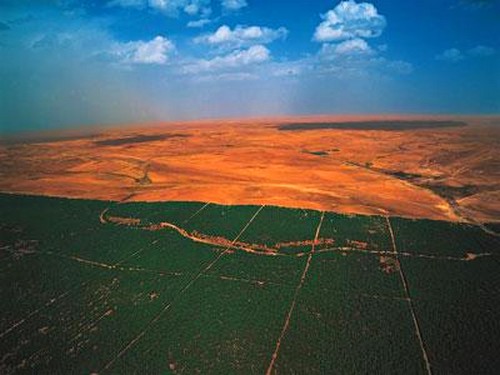
يعد مشروع السّد الاخضر من أكبر المشاريع في عهد الرئيس هواري بومدين كان الهدف منه اقامة شريط نباتي من الاشجار من الشرق إلى الغرب قصد فصل تحويل الصحراء عن الشمال ووقف ظاهرة التصحّر إلا أن المشروع شهد التوقف ولم يستكمل إلى يومنا هذا بعد وفاة صاحب فكرة المشروع الراحل هواري بومدين. أطلق مشروع السد الاخضر سنة 1971 للحد من تقدم الرمال نحو الشمال الخصب طوله 1700 كيلومتر على عمق تجاوز في بعض الأحيان 400 كيلومتر كان لهذا السد دور في نشوء 400 قرية نموذجية جديدة، والحد من هجوم الصحراء على المناطق الحضرية.

فكرة السد

ولدت فكرة مشروع "السد الأخضر" مباشرة بعد الاستقلال، حيث كان التشجير واحدا من الأولويات الطارئة وذلك لتجديد الغابات التي التي تضررت أثناء حرب التحرير. العمل في مشروع "السد الأخضر" بدأ فقط في بداية السبعينات، وبالتحديد في عام 1974. المشروع الذي يربط الحدود الجزائرية الغربية إلى الحدود الشرقية على مسافة 1500 كيلومترا وعرض 20كلم وينتشر على سطح ما مساحته أكثر من 3 ملايين هكتار.و يحتوي على أكثر من 7 مليار شجرة شرع في هذا الإنجاز في عدة أقاليم وهي البيض وتادميت بالقرب من الجلفة وبريكة جنوب الأوراس وشملت مختلف العمليات التي أجريت إلى يومنا هذا مساحة تقرب من 180 ألف هكتار.

خصائص السد الأخضر في الجزائر

  • المناخ : "السد الأخضر"يساهم في الحد من تقدم الصحراء الكبرى حيث ترتفع الحرارة فيها وتحدّها سلسلة جبلية تفصل الشّمال عن الجنوب. عموما، هناك فصلان فقط في المنطقة: حرارة الصيف وبرودة الشتاء. درجات الحرارة في الشتاء تتراوح بين 1،8 و 1،9 درجة مئوية، وذلك الصيف يتراوح بين 33،1 و 37،6 درجة مئوية، بينما قياسات المطر ضعيفة نظرا لقربها من شبه القاحلة "مناخ جاف".
كل هذه العوامل المناخية التي تؤثر مباشرة في تنمية الغطاء النباتي في مسارات المنطقة من إبراز تدهورها حتى اختفائه، مما بالعين ساندي الأسباب.
  • النباتات : الغطاء النباتي الذي يعكس طبيعتها وخصائصها من حيث المناخ، واقل درجة من تلك الأرض.
يوجد في "السد الأخضر"، نوعان من النباتات : • النباتات الغابية : البلوط الأخضر (Quercus ilex) وشجرة الفستق من الأطلس (Pistacia atlantica) والاشجار البرية المستحلب (Ziziphus lotus). • النباتات الرعوية : تتألف عادة من الحلفاء الذي يستغل لصناعة الورق. ت- الأرض :

خصائص الأرض

  • ذات عمق لا يتجاوز أحيانا 60 سم • ارتفاع كمية من الحجر الجيري النشط• كمية صغيرة من المواد العضوية الأساسية * درجة الحموضة (أعلى من 7،5). هذه الخصائص دعم تآكل الأرض.
كما انه لا يسقى

الهدف

في البداية، "السد الأخضر" الذي تعتبر حزام اخضر ضد تقدم الرمال من الصحراء. 100ألف هكتار من الأرض مع المشاريع الصغيرة لسكان المنطقة. ج- التحقيق: أعمال هذا المشروع يعالج مكتب المفوضية العليا للخدمة الوطنية، وهو نصب على عدة نقاط في هذا المشروع، من أعمال الوحدات التي تتألف من صغار الجنود تحت تدريب التقني السماح لهم بتنفيذ البرامج التي أسندت إليهم. وبالإضافة إلى هذه الهيئة النضر لحجم المشروع وهناك أيضا شركات أخرى المشاركة في أعماله، مثل : المكتب الوطني للغابات. وخدمات إدارة الغابات حيث كان دور المراقبة والمتابعة من كل القائمة في إطار المشروع على مستوى الولايات.


Blogroll

أدخل بريدك الإلكتروني ليصلك جديد المواضيع و الأخبار المنشورة.